
Autonomous Agents and SaaS Efficiency: Reimagining the Workforce
Autonomous agents do more than recommend; they execute. Learn how agentic systems remove bottlenecks and unlock faster SaaS growth.
The Limitation of Suggestions
For the past five years, the narrative around AI in SaaS has been focused on "co-pilots." The AI sits beside the user, watches what they do, and occasionally taps them on the shoulder with a suggestion. "You should follow up with this lead," or "This segment might be at risk of churn."
This was a necessary stepping stone. But it is fundamentally a broken model for maximum scale.
A co-pilot still requires a pilot. And humans are the slowest part of any modern growth engine.
The Agentic Shift
The next evolution of SaaS is moving from suggestive AI to agentic AI.
An agent is different from a co-pilot. A co-pilot requires human approval to take action. An agent is given an objective, equipped with tools (APIs, communication channels, state graphs), and authorized to act autonomously within a set of guardrails.
When an AI agent detects that a high-value account is experiencing friction during onboarding, it does not send an alert to a Customer Success Manager. It dynamically restructures the onboarding sequence, sends a highly contextual email directly from the Account Executive's inbox, and temporarily suspends all standardized marketing drip campaigns to that account to avoid mixed messaging.
It does all of this in three seconds.
The Three Phases of Autonomy
Organizations typically traverse three phases when moving toward an agentic architecture:
1. The Observation Phase: The system monitors user state and behavior, learning the correlations between actions and revenue outcomes. 2. The Advisory Phase: The system suggests interventions to human operators based on its observations. 3. The Autonomous Phase: The system identifies a deviation from the desired state and autonomously executes the optimal intervention from its toolkit.
Most companies are stuck in phase two. They have dashboards full of insights, but they lack the nervous system to act on them automatically.
Why Speed is the Ultimate Moat
In traditional SaaS, the speed of response is bounded by human cognition and organizational friction. The meeting required to analyze the churn data. The Jira ticket required to update the onboarding flow.
When you replace those human bottlenecks with agentic workflows, your speed of iteration moves from weeks to milliseconds.
When your system can test, learn, and adapt autonomously, you compound your growth advantages at a rate that traditional organizations physically cannot match.
Reimagining the Workforce
This shift does not eliminate the need for humans; it elevates them.
When autonomous agents handle the micro-optimizations—the exact timing of a check-in email, the dynamic pricing discount required to close a specific lead, the routing of an angry customer to the right support tier—human operators are freed to do what they actually do best:
- Setting strategic direction
- Defining the boundaries and compliance guardrails
- Designing new playbooks for the agents to test
The humans become the architects of the machine, rather than the cogs within it.
You don't build a hyper-growth SaaS company by hiring more people to push buttons. You build it by building an engine that pushes the buttons itself.
Ready to boost your trial conversion?
Join our waitlist and be among the first to experience Synapse Flow AI.
Join our DiscordMore from the blog
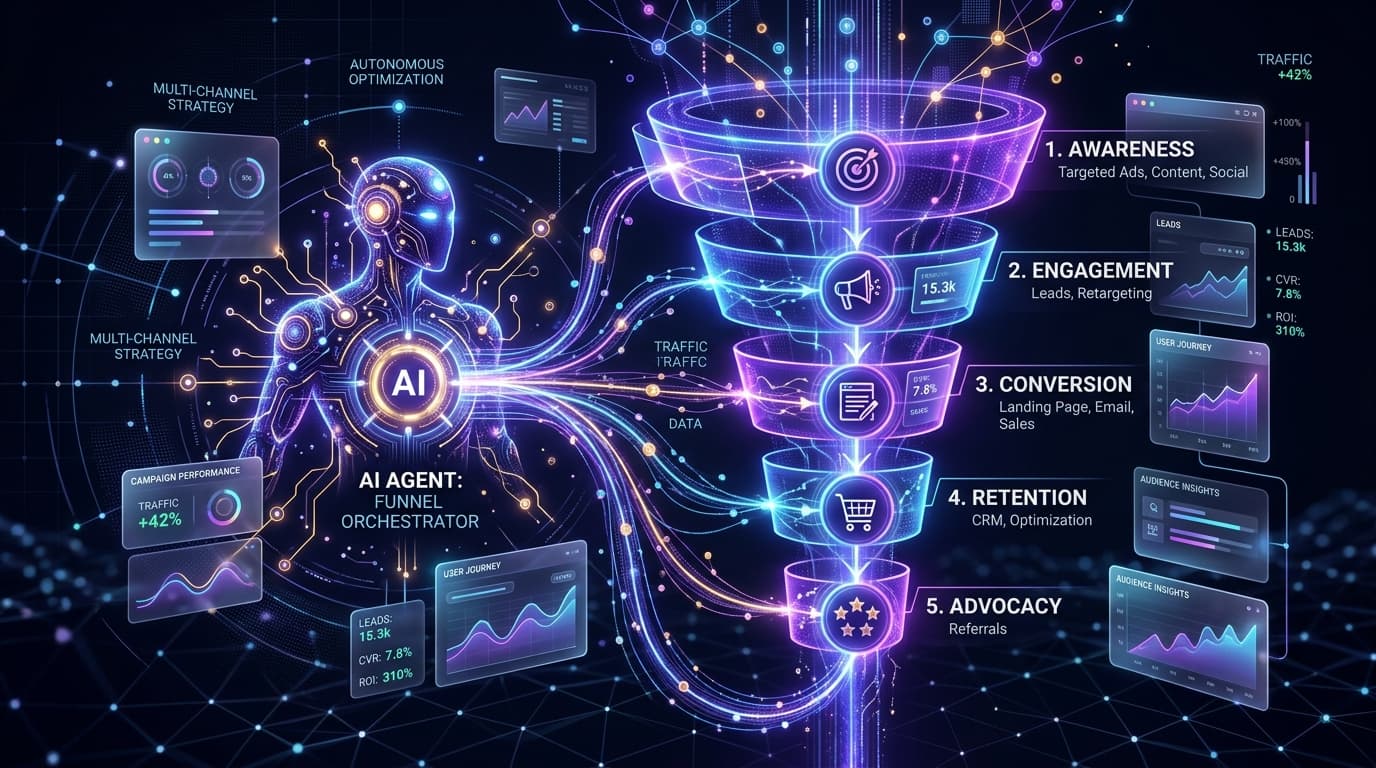
Orchestrating Activation with Autonomous AI Agents
Discover how autonomous AI agents replace rigid marketing flows by continuously experimenting to find the fastest path to your user's trial activation.

Streaming Infrastructure for PLG Conversion Engines
Learn why real-time streaming architectures are essential for triggering sub-second interventions and maximizing trial conversions in B2B SaaS platforms.

Bridging the AI Sales Intent Chasm in B2B SaaS
Bridge the gap between product usage signals and sales outreach by orchestrating AI-driven contextual handoffs that convert free trials to enterprise.