
The Architecture of Speed: Why Sub-300ms Latency Changes Everything in SaaS
Sub-300ms response turns intent into revenue. Learn why real-time execution latency is a core competitive advantage in AI-native SaaS.
The Latency Tax
Every SaaS company knows they have a churn problem. They build dashboards, hire analysts, and run weekly growth meetings. What they rarely consider is the latency tax—the silent revenue bleeder that occurs between the moment a user signals intent and the moment the system responds.
A trial user visits the pricing page for the third time in 48 hours. They invite their VP of Engineering. They connect their production database. These are not passive behaviors. These are the unmistakable signatures of a high-intent prospect who is actively evaluating a purchase decision.
In a well-tuned system, this signal triggers an immediate intervention. A personalized email lands in their inbox within seconds—relevant, contextual, perfectly timed.
In a typical system, this signal enters a batch queue. It waits for the next processing cycle. Fifteen minutes pass. Thirty. An hour. The user's intent window closes. They make a decision—often to do nothing—while your system is still spinning up.
The gap between signal and response is where revenue goes to die.
Why Traditional Orchestration Fails
The legacy approach to SaaS automation was built around a fundamentally different model of user behavior: predictable, linear, and slow.
Drip email sequences assumed users moved through evaluation at roughly the same pace. Batch data processing assumed that behavioral signals could be aggregated, analyzed, and acted upon in weekly or daily cycles.
This model worked when user evaluation cycles measured in weeks. In 2026, they measure in hours.
The modern B2B buyer is sophisticated. They have seen every SaaS pitch deck. They read the reviews. They talk to their network. By the time they book a demo, they have already made their decision. The trial period is not evaluation time—it is conviction time.
The signals that fire during the trial are not "data points to be analyzed later." They are the last mile of the sales process. And in the last mile, speed is the entire game.
The Three Pillars of Real-Time Execution
A proper execution engine rests on three architectural pillars, each addressing a different class of latency failure:
1. Event-Driven Triggering
Traditional systems use time-based triggers: "Send this email 48 hours after signup." Event-driven systems respond to behavioral signals: "Send this email when the user visits the pricing page for the third time."
The difference is not cosmetic. Time-based triggers create a fundamental disconnect between user behavior and system response. The user moves at their own pace; the system waits for its own schedule.
Event-driven triggering collapses the distance between signal and response to milliseconds. The system does not ask "Is it Day 3?" It asks "Did this user just exhibit high-intent behavior?" When the answer is yes, the execution layer fires immediately.
2. Parallel Processing Architecture
Sequential processing creates a bottleneck: each step in a workflow must complete before the next begins. If an AI content generation step takes 800ms, and a data lookup takes 400ms, and an email dispatch takes 200ms, a sequential system takes 1,400ms to complete what a parallel system could complete in 800ms.
More importantly, sequential systems are fragile. A failure at step three rolls back the entire sequence. A parallel architecture isolates failures—each branch operates independently, and a failure in one branch does not cascade into others.
The Real-Time Execution Engine uses parallel fan-out for scenarios where multiple actions must occur simultaneously: pre-generating content while validating compliance, while updating the state graph, while queuing the analytics event. The user experiences instantaneous response; the system handles the complexity behind the scenes.
3. Sub-300ms SLA Guarantees
Not all actions are equal. A high-intent trigger requires immediate response. A background analytics sync can tolerate delay. The execution engine must differentiate between these use cases and allocate resources accordingly.
A true real-time execution architecture provides explicit SLA guarantees: high-priority triggers complete in under 300ms, including AI inference time. This is not "best effort" or "typically fast." It is a contractual guarantee, enforced by the architecture itself.
The Three Execution Patterns
Speed alone is not enough. The execution engine must support the three distinct patterns that cover the full spectrum of growth orchestration:
Sequential Pipeline: For standard, linear journeys where each step depends on the completion of the previous step. New user onboarding sequences, educational nurture tracks, and standard upgrade prompts all follow sequential logic.
Parallel Fan-out: For high-volume scenarios where identical actions must be taken across large cohorts simultaneously. Product announcement broadcasts, A/B test assignments, and mass re-engagement campaigns all benefit from parallel execution.
Event-Driven Routing: For complex, conditional responses to unpredictable user behaviors. When a user hits a specific behavioral state, the system evaluates all possible branches and routes to the appropriate path in real-time. This is where the execution engine handles the long tail of edge cases that time-based systems cannot anticipate.
Built-In Fail-Safes
Speed without safety is reckless. The execution engine includes guardrails that prevent catastrophic outcomes:
Hard Budget Caps: AI inference costs money. Without hard limits, an autonomous system can generate runaway expenses in seconds. Every execution path includes configurable budget enforcement that halts further AI operations when a threshold is reached.
Retry Logic: Downstream API failures are a fact of life. The execution engine implements exponential backoff with jitter, ensuring that transient failures are handled gracefully without overwhelming dependent systems.
Human-in-the-Loop Escalation: When the system encounters a scenario it cannot resolve with sufficient confidence—say, a high-value account exhibiting conflicting signals—it pauses and alerts a human operator with full context, rather than guessing incorrectly.
Atomic Save Rollbacks: Every state transition is atomic. If a partial failure occurs mid-execution, the system rolls back to the last known good state, ensuring no orphaned records or corrupted user journeys.
The Competitive Moat
Latency is not a feature. It is an architectural advantage that compounds over time.
A system that responds in 300ms versus 30 minutes will, over the course of a year, intercept thousands of high-intent signals that the slower system simply missed. Those signals convert. That conversion compounds.
The execution engine is the muscle behind every other component in the system: the AI Workflow Architect generates the logic, the Infinite Canvas visualizes the flow, the RAG Knowledge Engine provides the context. But the execution engine is what makes it real.
Strategy without execution is just imagination. The execution engine is what separates the companies that win from the companies that plan.
Ready to boost your trial conversion?
Join our waitlist and be among the first to experience Synapse Flow AI.
Join our DiscordMore from the blog
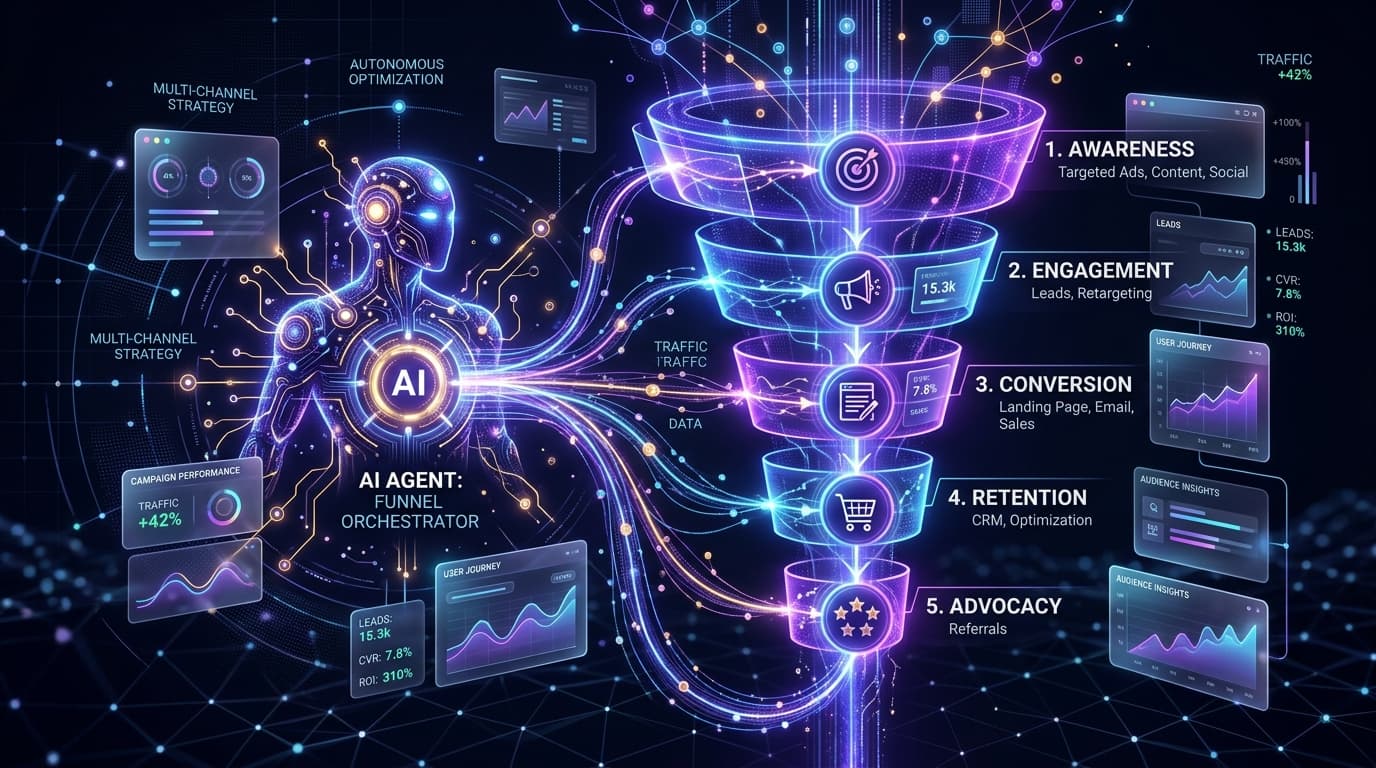
Orchestrating Activation with Autonomous AI Agents
Discover how autonomous AI agents replace rigid marketing flows by continuously experimenting to find the fastest path to your user's trial activation.
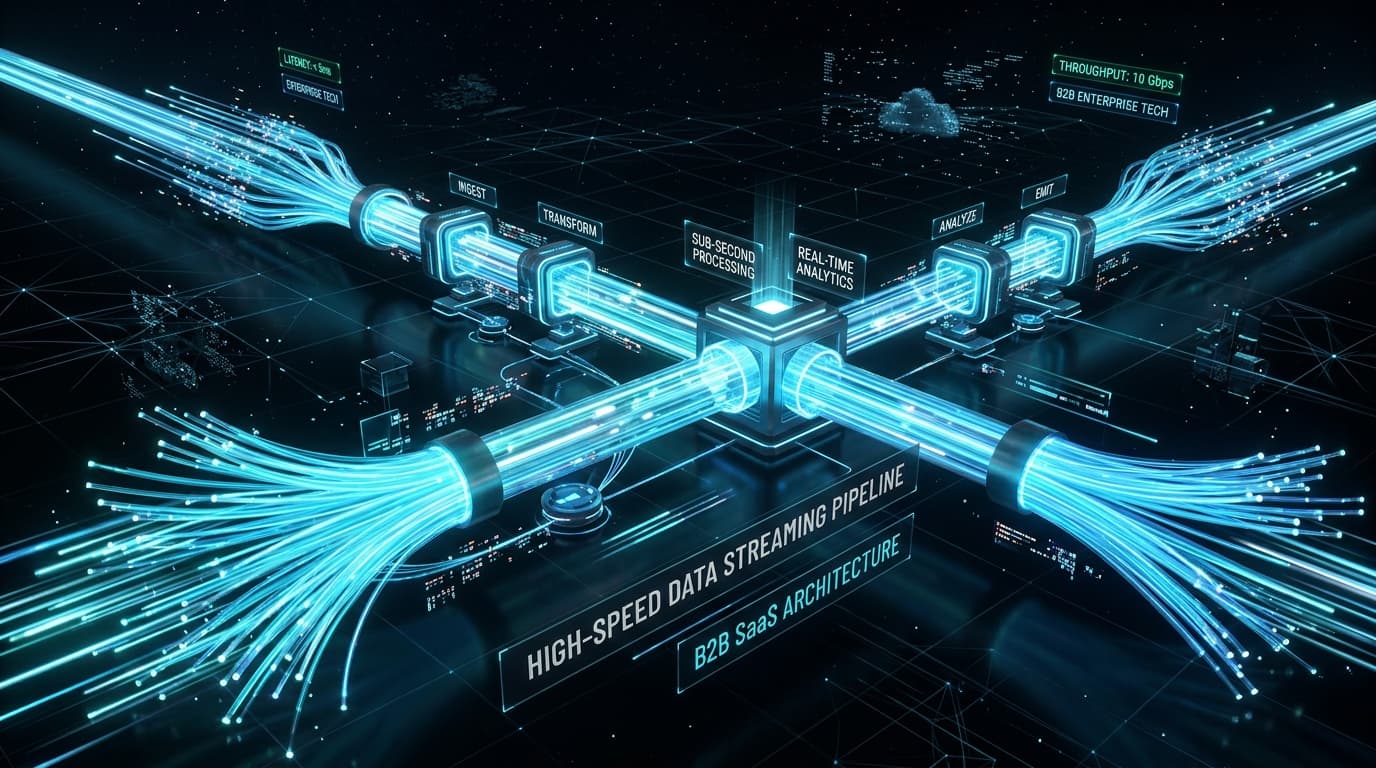
Streaming Infrastructure for PLG Conversion Engines
Learn why real-time streaming architectures are essential for triggering sub-second interventions and maximizing trial conversions in B2B SaaS platforms.
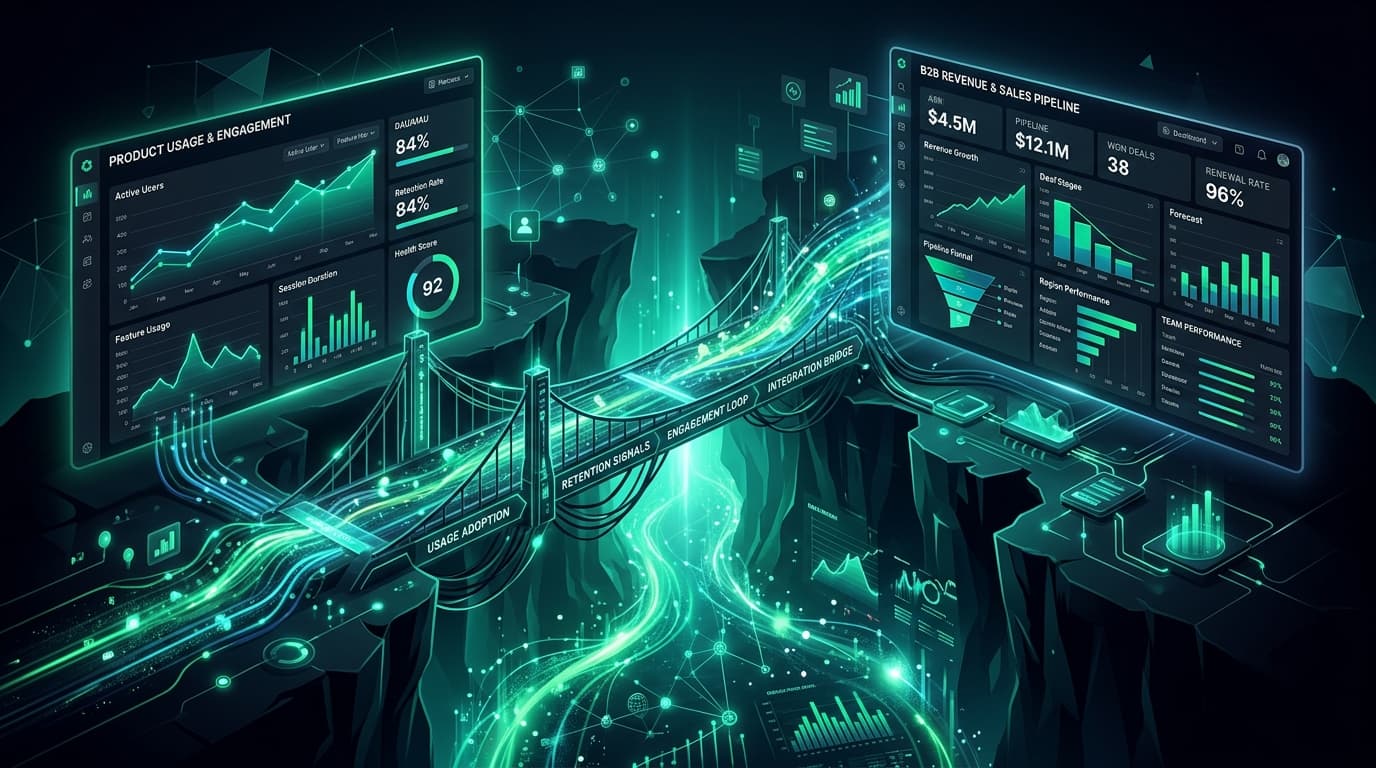
Bridging the AI Sales Intent Chasm in B2B SaaS
Bridge the gap between product usage signals and sales outreach by orchestrating AI-driven contextual handoffs that convert free trials to enterprise.