
Intent Decay: The Hidden Force Killing Your Trial Conversions
Intent decays fast. If your system misses high-signal behavioral moments, conversion drops. Learn how to intercept intent before it expires.
The Signal You're Ignoring
A trial user opens your app at 2:14 PM. They navigate directly to your pricing page. They return to the product, enable the API integration, and then visit the pricing page again at 2:31 PM. Seventeen minutes later, they are back—third visit.
This is not curiosity. This is a buying signal. This user is comparing plan tiers, calculating ROI, and building the internal case to purchase. Their intent is at its peak.
At 3:45 PM, your batch system finally processes the event. A generic "Are you enjoying your trial?" email hits their inbox.
The user doesn't open it. They've already moved on—to a competitor, to a spreadsheet, to a meeting that consumed the afternoon. The decision they were close to making has dissolved.
This is intent decay in action. And it's silently killing your conversion rate.
What Intent Decay Actually Is
Intent is not a binary state. It is not a switch that flips from "interested" to "not interested." Intent is a curve. A signal that builds, peaks, and—if not intercepted—decays.
The decay is not metaphorical. It follows predictable, measurable patterns:
- Cognitive momentum dissipates. The mental model the user built while exploring your product begins to fade within minutes. Details blur. The emotional energy of the "I could see this working" moment cools.
- Context collapses. The specific problem they were trying to solve gets buried under the next 40 emails, three meetings, and two Slack threads that follow any given afternoon in a B2B company.
- Competing alternatives fill the gap. The competitor whose sales rep happened to follow up within the hour doesn't win because their product is better. They win because they were present when the intent was still alive.
The intent curve has a half-life. For high-consideration B2B SaaS, research suggests that intent signal value degrades by roughly 50% within the first hour of a peak behavioral moment, and approaches zero within 24 hours.
Your batch processing system is not just slow. It is architecturally incapable of operating within the window where conversion is possible.
Mapping the Decay Curve
Not all behavioral signals decay at the same rate. Understanding the decay curve for different signal types is the first step toward intercepting them in time.
Fast-decay signals (half-life: minutes)
- Repeated pricing page visits within a single session
- Failed integration attempt followed by retry
- In-app upgrade modal dismissed but revisited
- Invite link generated but not yet sent
These signals represent a user who is actively, presently engaged with a decision. The intervention window is 2–5 minutes. Anything beyond 10 minutes is almost certainly too late.
Medium-decay signals (half-life: hours)
- Hitting a usage limit or feature gate for the first time
- Completing a key workflow milestone (first report generated, first segment created)
- Inviting a team member who then activates
- Connecting a high-value integration (CRM, data warehouse, payment provider)
These signals indicate momentum. The user has accomplished something meaningful and is in a positive emotional state. The optimal intervention window is 15–60 minutes—long enough to let the accomplishment land, short enough to capitalize on the dopamine spike.
Slow-decay signals (half-life: days)
- Achieving the Aha! Moment (product-defined activation milestone)
- Multiple consecutive daily active sessions
- Expanding usage beyond the initial use case
- Organic team growth (inviting colleagues without being prompted)
These signals represent deep engagement. The decay is slower, but it is still real. A user who has achieved deep activation but has not received a targeted expansion offer will eventually plateau—or, worse, get pulled away by a competitor.
Why Traditional Systems Fail to Intercept
The fundamental problem is architectural.
Traditional marketing automation platforms were not designed around intent curves. They were designed around calendars. Their core data model is: send message X on day N. Everything else—behavioral triggers, dynamic content, segmentation—is a retrofit bolted onto a time-based foundation.
When you bolt event-based triggering onto a time-based system, you get a hybrid that satisfies neither requirement. Events are captured, batched, processed in aggregation cycles, and evaluated against rules that were written days or weeks ago by a marketer who couldn't have anticipated the specific behavioral combination that just occurred.
Three failure modes emerge:
1. The Aggregation Delay
Events are captured individually but processed in batches. A user can exhibit five high-intent signals in rapid succession—pricing page, API docs, pricing page again, team invite initiated, upgrade modal opened—and the system treats them as five separate low-confidence signals evaluated in separate batch cycles, rather than one high-confidence intent cluster that demands immediate action.
2. The Rule Rigidity Problem
Static if/else rules cannot model the probabilistic nature of intent. A rule that says "send email when user visits pricing page twice" fires identically whether the two visits happened within three minutes or three days. It has no concept of the decay function. It cannot ask: "Is this intent still alive?"
3. The Channel Tunnel
Most automation platforms are single-channel by default. An email platform fires an email. An in-app messaging tool fires a modal. Neither system knows what the other is doing. When intent is at its peak, the optimal intervention might be an in-app banner and a personalized email and a Slack notification to the account's assigned CSM—all triggered simultaneously, all coordinated. Siloed channel tools cannot execute this.
The Architecture of Intent Interception
Intercepting intent before it decays requires a fundamentally different architecture. Not better rules. A different model.
Real-Time Behavioral Stream Processing
Every user event—click, navigation, API call, feature interaction—must flow into a real-time processing layer that evaluates behavioral state continuously, not periodically. The system is not waiting for a batch window. It is listening.
When a new event arrives, the engine updates the user's behavioral state graph and immediately re-evaluates whether any intent threshold has been crossed. If the user's fourth pricing page visit just pushed their intent score above the intervention threshold, the response fires in the same second.
Intent Scoring with Decay Functions
A static score is not enough. A user who visited the pricing page once three days ago and a user who visited it three times in the last ten minutes should not have the same score. Intent scoring must incorporate temporal decay.
The mathematical model is straightforward: each signal has a base weight and a decay constant. The current contribution of a signal to the total intent score is its base weight multiplied by an exponential decay function of the time elapsed since the signal fired. Signals that fired minutes ago contribute their full weight. Signals that fired yesterday contribute almost nothing.
When the decayed intent score crosses a threshold, the system acts—not when a batch job runs, not when a campaign is scheduled, but now.
Contextual, Omnichannel Response
The intervention itself must match the intensity and context of the intent signal.
A user who just hit their usage limit for the third time in a week does not need a generic upgrade email. They need:
- An in-app modal that appears immediately, acknowledging the specific limit they hit and showing exactly how an upgrade resolves it
- A personalized email from their assigned CSM that references the specific workflow they were running when the limit triggered
- An internal alert to the sales team with the full behavioral context, enabling a timely, informed outreach
All of this must be orchestrated in parallel, within seconds, from a single behavioral trigger. This is what real-time execution engines are built for.
Measuring Intent Decay in Your Own Data
You do not need to take the concept of intent decay on faith. You can measure it in your own behavioral data.
Pull your last 90 days of trial conversions. For each conversion, find the timestamp of the highest-intent behavioral signal in the session leading up to conversion (pricing page visit cluster, upgrade modal interaction, high-value integration connection). Then measure the time delta between that signal and the moment of conversion.
You will almost certainly find a bimodal distribution: a spike of conversions that happened within minutes of the peak intent signal (users who converted during the same session), and a long tail of conversions that happened days or weeks later—representing users who managed to retain their intent despite the system's inability to capitalize on it.
The area between those two modes is your opportunity. Those are the users who would have converted in the moment, but whose intent decayed faster than your system responded.
That gap is measurable. And it is corollable with revenue.
From Reactive to Predictive
The final evolution of intent interception is not just real-time reaction—it is prediction.
Rather than waiting for a user to cross the intent threshold before responding, a predictive system identifies the behavioral signatures that precede peak intent. It recognizes the early indicators of the curve's upswing—the first pricing page visit, the integration exploration, the documentation read pattern—and begins warming up the response infrastructure before the peak arrives.
By the time the user lands on the pricing page for the third time, the personalized email is already drafted, the CSM alert is queued, and the in-app modal is staged. The system fires instantly because it has been preparing for half an hour.
Intent decay is not a marketing problem. It is an infrastructure problem. Solve it at the architectural level, or keep losing conversions to the clock.
Ready to boost your trial conversion?
Join our waitlist and be among the first to experience Synapse Flow AI.
Join our DiscordMore from the blog
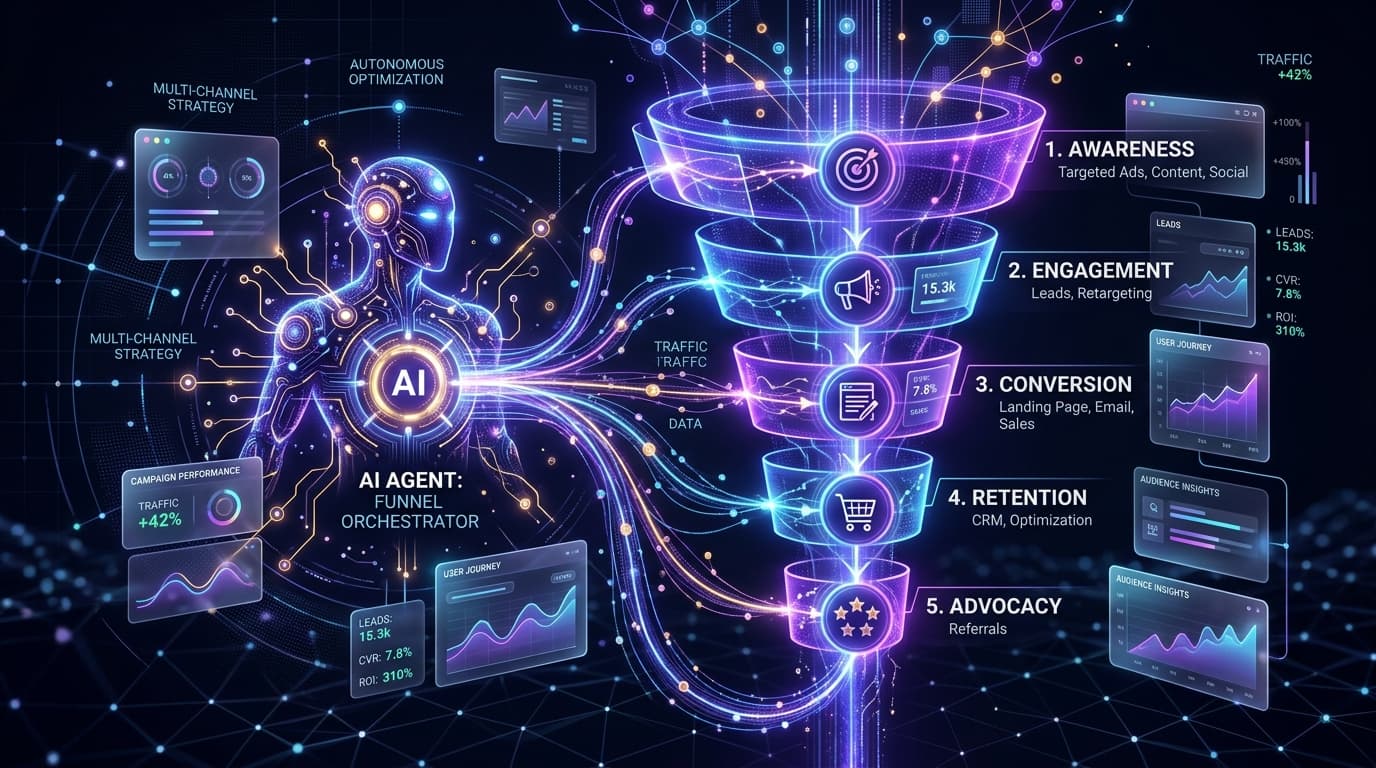
Orchestrating Activation with Autonomous AI Agents
Discover how autonomous AI agents replace rigid marketing flows by continuously experimenting to find the fastest path to your user's trial activation.
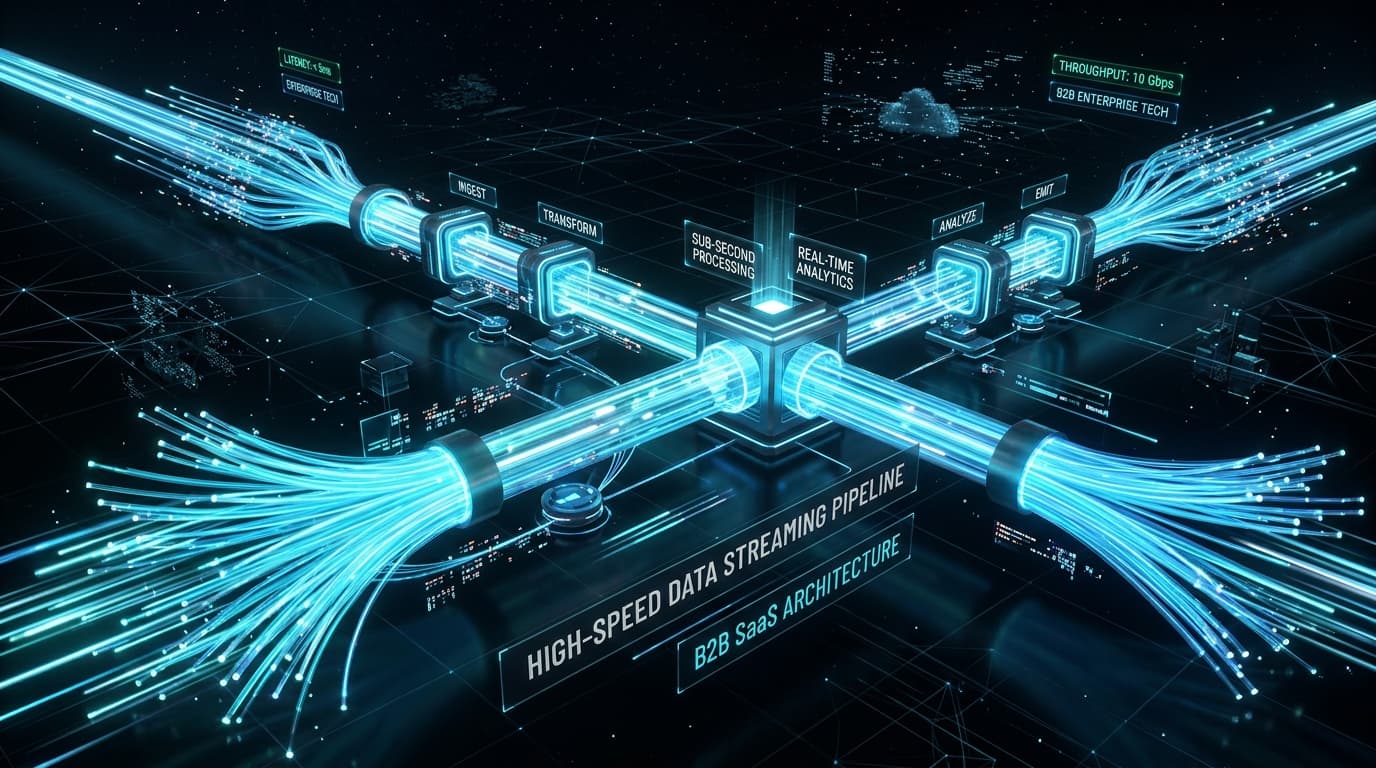
Streaming Infrastructure for PLG Conversion Engines
Learn why real-time streaming architectures are essential for triggering sub-second interventions and maximizing trial conversions in B2B SaaS platforms.
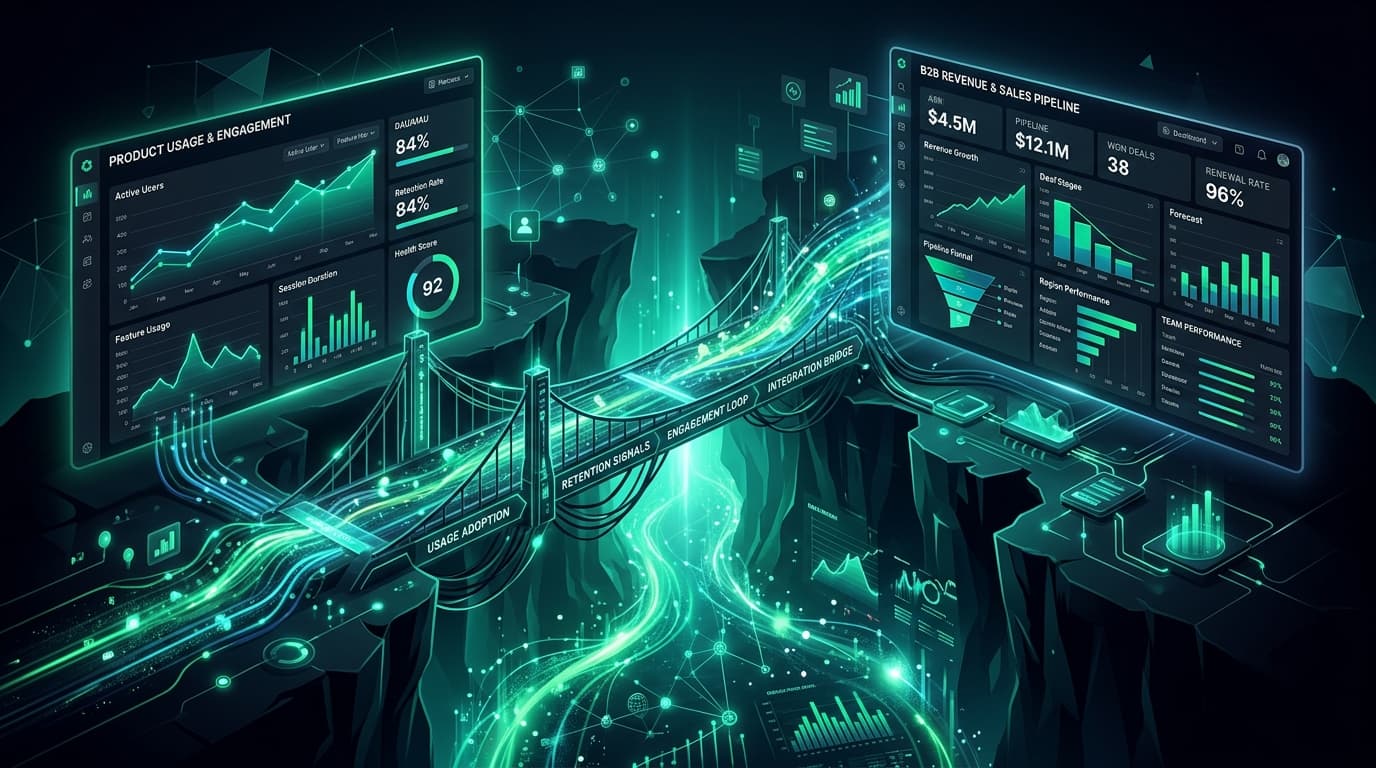
Bridging the AI Sales Intent Chasm in B2B SaaS
Bridge the gap between product usage signals and sales outreach by orchestrating AI-driven contextual handoffs that convert free trials to enterprise.