
The Death of the Dashboard: Why Passive Monitoring Is a Growth Killer
Dashboards report the past. Autonomous systems act in the moment. Learn why self-executing insights are the next SaaS growth advantage.
The Dashboard Paradox
Every SaaS company builds dashboards. They are the first thing investors ask for, the first thing product managers refresh in the morning, and the last thing anyone actually acts on in real-time.
We have built an entire industry around making data visible. But visibility is not the same as action. And in 2026, the gap between seeing a problem and fixing it is the gap between growth and stagnation.
A dashboard tells you what happened. An orchestration engine decides what happens next.
The Observation Tax
Every dashboard imposes an invisible tax on your organization: the Observation Tax.
This is the cumulative cost of humans staring at charts, interpreting trends, formulating hypotheses, debating in Slack threads, scheduling meetings to align on action items, and finally—days later—implementing a change.
Consider the timeline:
- 1Monday 9 AM: A growth lead notices trial-to-paid conversion dipped 12% over the weekend.
- 2Monday 11 AM: They pull a deeper Mixpanel report to isolate the cohort.
- 3Monday 3 PM: A cross-functional meeting is scheduled for Tuesday.
- 4Tuesday 2 PM: The team agrees the onboarding email sequence needs adjustment.
- 5Wednesday 10 AM: Marketing rewrites the email copy.
- 6Thursday: The updated sequence goes live.
Four days. Four days of compounding revenue loss because the system required a human to look at a screen before it could respond.
The Fundamental Design Flaw
Dashboards were designed for a world where:
- Data was scarce and expensive to collect
- Humans were the only entities capable of pattern recognition
- Decision cycles operated on weekly or monthly cadences
- The number of variables was manageable by a single analyst
None of these assumptions hold in modern SaaS.
Today, a mid-stage B2B company generates millions of behavioral events per day across dozens of product surfaces. No human can monitor this in real-time. No team can react to every signal. The dashboard becomes a retrospective artifact—useful for board meetings, useless for growth.
From Passive Monitoring to Active Intelligence
The architectural shift required is profound: we must move from systems that display information to systems that consume information and act autonomously.
This is not a dashboard with alerts bolted on. Alert fatigue is just as paralyzing as dashboard blindness. When everything is an alert, nothing is.
True active intelligence requires three capabilities:
- 1Continuous State Evaluation: The system maintains a real-time state graph of every user, every cohort, and every funnel. It doesn't wait to be queried. It evaluates continuously.
- 2Autonomous Decision-Making: When the system detects that a specific onboarding branch is underperforming, it doesn't send a Slack notification. It executes. It reroutes users to an alternate agentic pathway, adjusts messaging via the Cortex Engine, and logs the intervention for audit.
- 3Closed-Loop Learning: Every autonomous action feeds back into the model. The system doesn't just react—it learns. Over time, its interventions become more precise, its timing more accurate, and its impact more measurable.
The best dashboard is the one nobody needs to open.
The Three Layers of Post-Dashboard Architecture
Layer 1: The Sensing Layer Raw event ingestion from every product surface, billing system, and communication channel. This layer must operate in real-time, not batch. Every click, every API call, every support ticket updates the unified state instantly.
Layer 2: The Reasoning Layer This is where AI replaces the human analyst. The reasoning layer continuously evaluates the state against defined objectives. It identifies anomalies, predicts churn risk, detects activation patterns, and prioritizes interventions—all without human prompting.
Layer 3: The Execution Layer The reasoning layer's decisions flow directly into orchestration. Emails are generated, in-app nudges are triggered, sales alerts are dispatched, and A/B experiments are dynamically rebalanced. The loop from observation to action closes in seconds, not days.
What Dashboards Still Do Well
To be clear: dashboards are not entirely obsolete. They serve two legitimate purposes:
- 1Strategic Review: Monthly and quarterly business reviews still benefit from high-level trend visualization. Boards and investors want charts.
- 2Audit and Transparency: When an autonomous system takes action, humans need the ability to review what it did and why. The dashboard becomes a retrospective audit tool, not a real-time decision-making interface.
The critical distinction is that dashboards move from being the primary decision-making interface to being a secondary review mechanism. The system acts first. Humans review after.
The Organizational Shift
Killing the dashboard is not just a technology change. It's a cultural one.
Growth teams must evolve from Dashboard Watchers to System Architects. Their job is no longer to stare at charts and react. Their job is to:
- Define the objectives the autonomous system optimizes toward
- Set the guardrails and compliance boundaries within which the AI operates
- Review the system's decisions and refine its reasoning models
- Design the interventions the system can deploy
This is a higher-leverage role. Instead of manually responding to one signal at a time, the team builds the intelligence that responds to every signal, all the time.
The Synapse Flow Approach
Synapse Flow AI was built for this post-dashboard world.
The platform doesn't give you a prettier chart. It gives you an autonomous growth engine that senses, reasons, and executes—continuously. Your Revenue Analytics still exist for strategic review, but the system's default mode is action, not observation.
The companies that win in 2026 will not be the ones with the best dashboards. They will be the ones that don't need them.
Stop watching your metrics. Start building systems that move them.
Ready to boost your trial conversion?
Join our waitlist and be among the first to experience Synapse Flow AI.
Join our DiscordMore from the blog
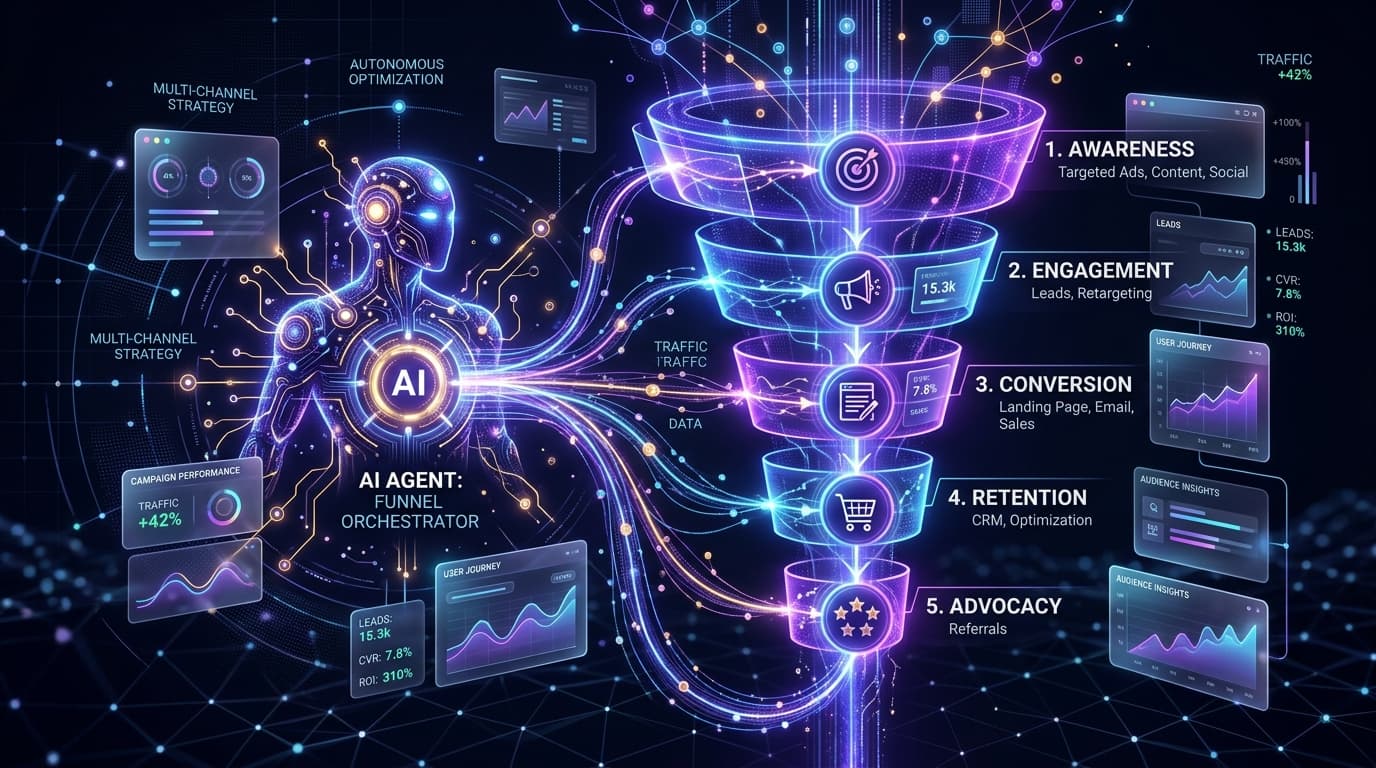
Orchestrating Activation with Autonomous AI Agents
Discover how autonomous AI agents replace rigid marketing flows by continuously experimenting to find the fastest path to your user's trial activation.
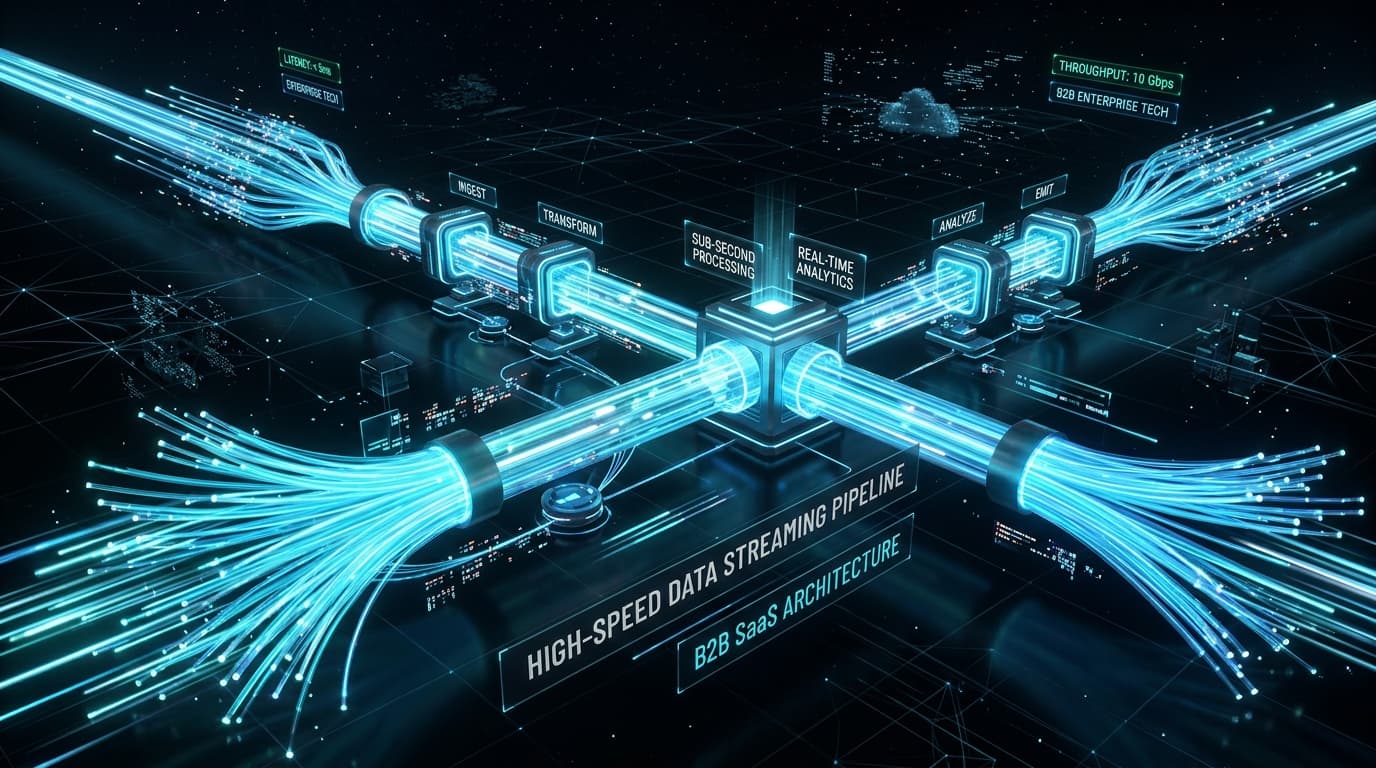
Streaming Infrastructure for PLG Conversion Engines
Learn why real-time streaming architectures are essential for triggering sub-second interventions and maximizing trial conversions in B2B SaaS platforms.
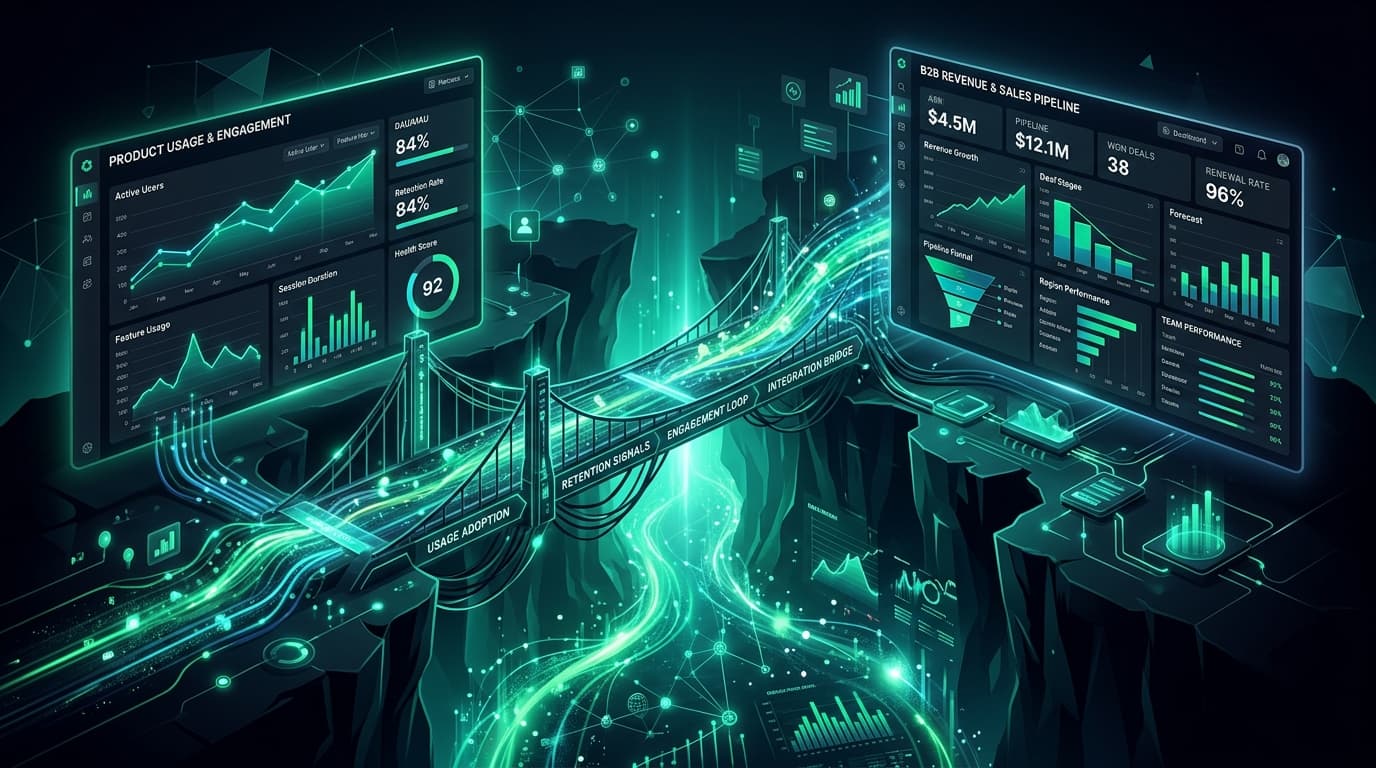
Bridging the AI Sales Intent Chasm in B2B SaaS
Bridge the gap between product usage signals and sales outreach by orchestrating AI-driven contextual handoffs that convert free trials to enterprise.