
The Feedback Loop Fallacy: Data vs. Learning
Collecting data is easy; acting on it is hard. Learn how autonomous feedback loops turn analytics into continuous revenue optimization.
The Illusion of Intelligence
Every modern SaaS company will tell you they are "data-driven." They have dashboards, they track events, they run cohort analyses. They sit on terabytes of behavioral data across Mixpanel, Amplitude, Snowflake, and a dozen other platforms.
And yet, their growth systems are fundamentally stupid.
Not because the data is bad. Because the loop is open.
Collecting data without closing the loop is like installing a smoke detector that never triggers the sprinklers.
The Open Loop Epidemic
Here is how most SaaS growth stacks actually work:
- 1Collect: Events fire. Pageviews, clicks, feature usage, API calls—everything gets logged.
- 2Store: Data flows into a warehouse. It sits there, neatly organized in tables and schemas.
- 3Analyze: Once a week—or once a month—someone queries the data, builds a chart, and presents it at a team meeting.
- 4Decide: The team debates what to do about the trend they spotted. They align on a hypothesis.
- 5Act: Someone manually updates a campaign, rewrites an email, or adjusts an onboarding flow.
- 6Wait: They check back in two weeks to see if anything changed.
This is not a feedback loop. This is a suggestion box.
A true feedback loop requires three properties:
- Continuity: It never stops evaluating.
- Autonomy: It acts without waiting for a human to schedule a meeting.
- Adaptation: Each action's outcome refines the next action's strategy.
Most growth stacks have zero of these properties.
Why Open Loops Kill Growth
The cost of an open loop is not just inefficiency. It is compounding opportunity loss.
Consider a concrete scenario: Your product analytics show that users who connect a third-party integration within their first session convert to paid at 3x the rate of those who don't. This is a powerful insight.
In an open-loop system:
- A product manager reads this insight in a quarterly review.
- They propose adding a prompt to the onboarding flow.
- Engineering prioritizes it for the next sprint.
- The prompt ships three weeks later.
- Marketing updates the email sequence a week after that.
- Six weeks have passed. Thousands of trial users never saw the prompt.
In a closed-loop system:
- The ML engine identifies the correlation in real-time.
- The orchestration layer immediately begins routing new users toward integration setup.
- The Cortex Engine generates contextual nudges—in-app, email, and push—tailored to each user's role and tech stack.
- Within hours, the system is testing three different intervention strategies.
- Within days, it has converged on the optimal approach and is executing it at scale.
The closed-loop system didn't just act faster. It acted better, because every intervention taught it something new.
The Three Broken Loops
In practice, SaaS growth stacks suffer from three distinct open-loop failures:
1. The Observation Loop
This is the gap between something happening and the system noticing it. In batch-processing architectures, events are ingested on schedules—hourly, daily, or worse. A user who churns at 9 AM might not register as churned until the next morning's ETL run.
Closing this loop requires real-time event processing. Not "near-real-time." Not "streaming with a 15-minute window." Actual, sub-second event evaluation.
2. The Decision Loop
This is the gap between noticing a signal and deciding what to do about it. In most organizations, this loop is closed by humans—analysts, marketers, product managers—who must interpret data, form hypotheses, and manually configure responses.
Closing this loop requires agentic intelligence. The system must be capable of evaluating a user's state against defined objectives and autonomously selecting the optimal intervention from its available toolkit.
3. The Learning Loop
This is the most neglected loop of all. Even companies that act quickly on data rarely feed the results of their actions back into the decision model. They run an A/B test, pick the winner, and move on. The insight dies in a Notion doc.
Closing this loop requires persistent model refinement. Every action the system takes must be instrumented. Every outcome must update the system's understanding of what works, for whom, and in what context.
The Anatomy of a Closed-Loop System
A truly closed-loop growth system operates as a continuous cycle with four phases:
Phase 1: Sense Every user interaction updates the unified state graph in real-time. The system doesn't wait to be queried. It maintains a living, breathing model of every user's journey, intent signals, and risk indicators.
Phase 2: Reason The agentic layer continuously evaluates the state against the company's growth objectives. It identifies gaps—users who should have activated but haven't, cohorts showing early churn signals, expansion opportunities in healthy accounts—and generates prioritized intervention plans.
Phase 3: Act The orchestration engine executes the intervention plan autonomously. It selects the channel (email, in-app, push, sales alert), generates the content via the Cortex Engine, and deploys the action—all within seconds of the triggering signal.
Phase 4: Learn This is where most systems stop. A closed-loop system doesn't. It instruments every action, measures the downstream impact on the target metric, and feeds that outcome back into the reasoning layer. The model updates. The next decision is sharper.
The cycle repeats—continuously, autonomously, and with increasing precision.
The Compounding Effect
The power of a closed loop is not linear. It is exponential.
An open-loop system improves when a human happens to notice an opportunity and has the bandwidth to act on it. A closed-loop system improves with every single interaction, every hour of every day.
After one week, the difference is marginal. After one month, it is significant. After one quarter, the closed-loop system has made thousands of micro-optimizations that no human team could have executed manually. It has discovered audience segments that no analyst would have hypothesized. It has converged on messaging strategies that no copywriter would have tested.
The gap between an open-loop and a closed-loop system is not a feature gap. It is an intelligence gap. And it widens every day.
The Cultural Prerequisite
Closing the loop is not purely a technology problem. It requires a cultural shift.
Growth teams must evolve from being operators to being architects. Their job is no longer to manually execute campaigns and analyze reports. Their job is to:
- Define the objectives the autonomous system optimizes toward
- Set the compliance guardrails within which the AI operates
- Curate the intervention toolkit (channels, content frameworks, escalation paths)
- Monitor the system's learning trajectory and course-correct when necessary
This is a fundamentally different role. It is higher-leverage, more strategic, and—critically—it scales. A team of five people architecting an autonomous system can outperform a team of fifty manually executing campaigns.
The Synapse Flow Approach
Synapse Flow AI was designed from day one as a closed-loop system.
The platform doesn't just collect your data and display it. It senses every event in real-time, reasons about the optimal next action using its agentic core, executes autonomously through its multi-channel orchestration engine, and feeds every outcome back into its learning model.
The result is a growth engine that gets smarter with every interaction—not one that waits for a human to read a chart and schedule a meeting.
The future of SaaS growth is not more data. It is closed loops.
Stop collecting data. Start closing loops.
Ready to boost your trial conversion?
Join our waitlist and be among the first to experience Synapse Flow AI.
Join our DiscordMore from the blog
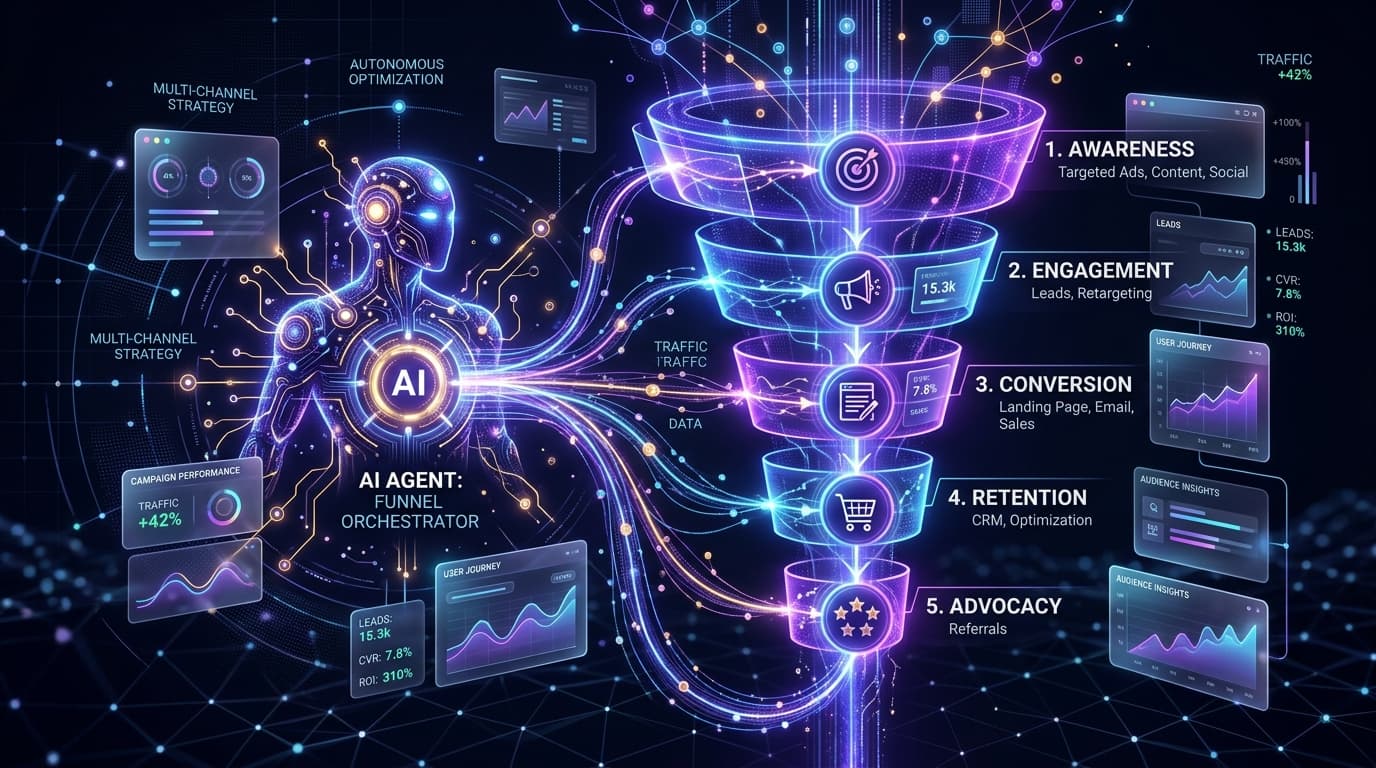
Orchestrating Activation with Autonomous AI Agents
Discover how autonomous AI agents replace rigid marketing flows by continuously experimenting to find the fastest path to your user's trial activation.
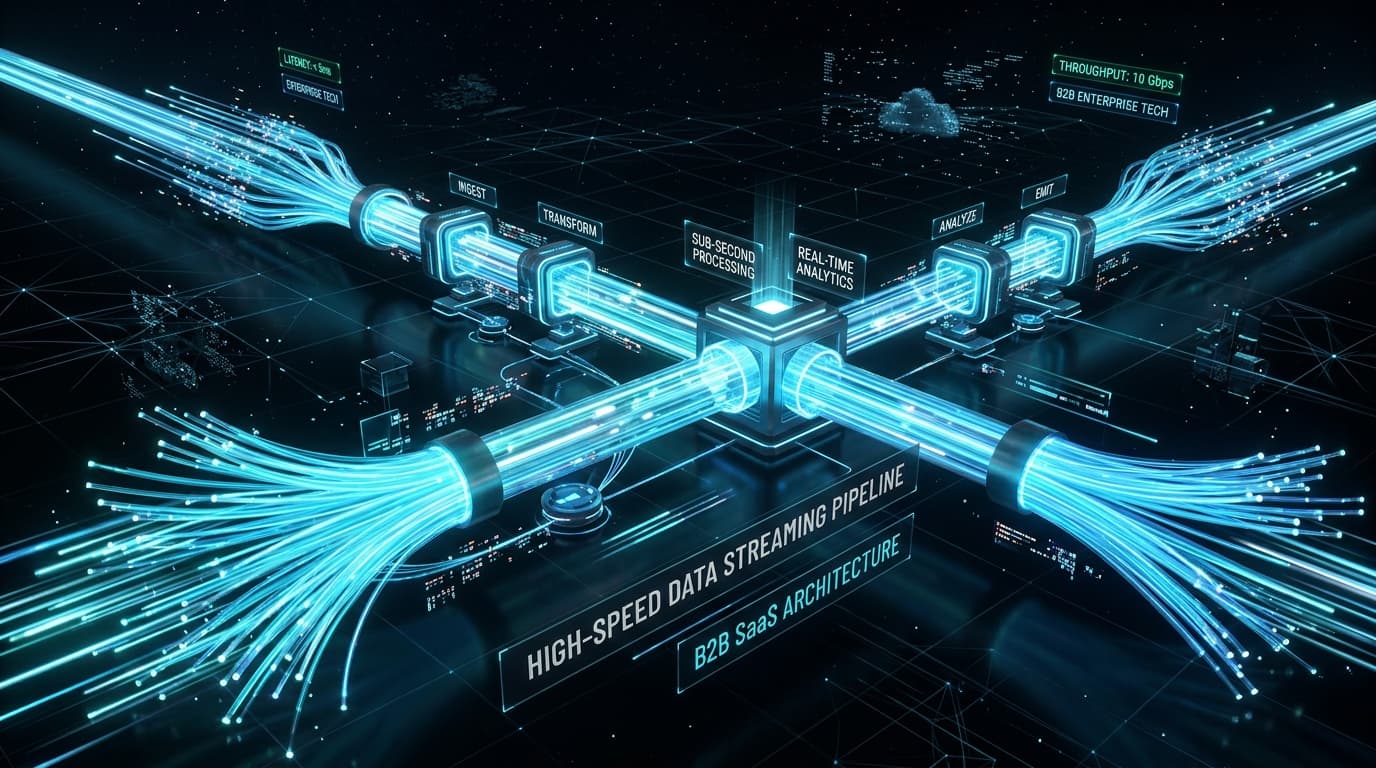
Streaming Infrastructure for PLG Conversion Engines
Learn why real-time streaming architectures are essential for triggering sub-second interventions and maximizing trial conversions in B2B SaaS platforms.
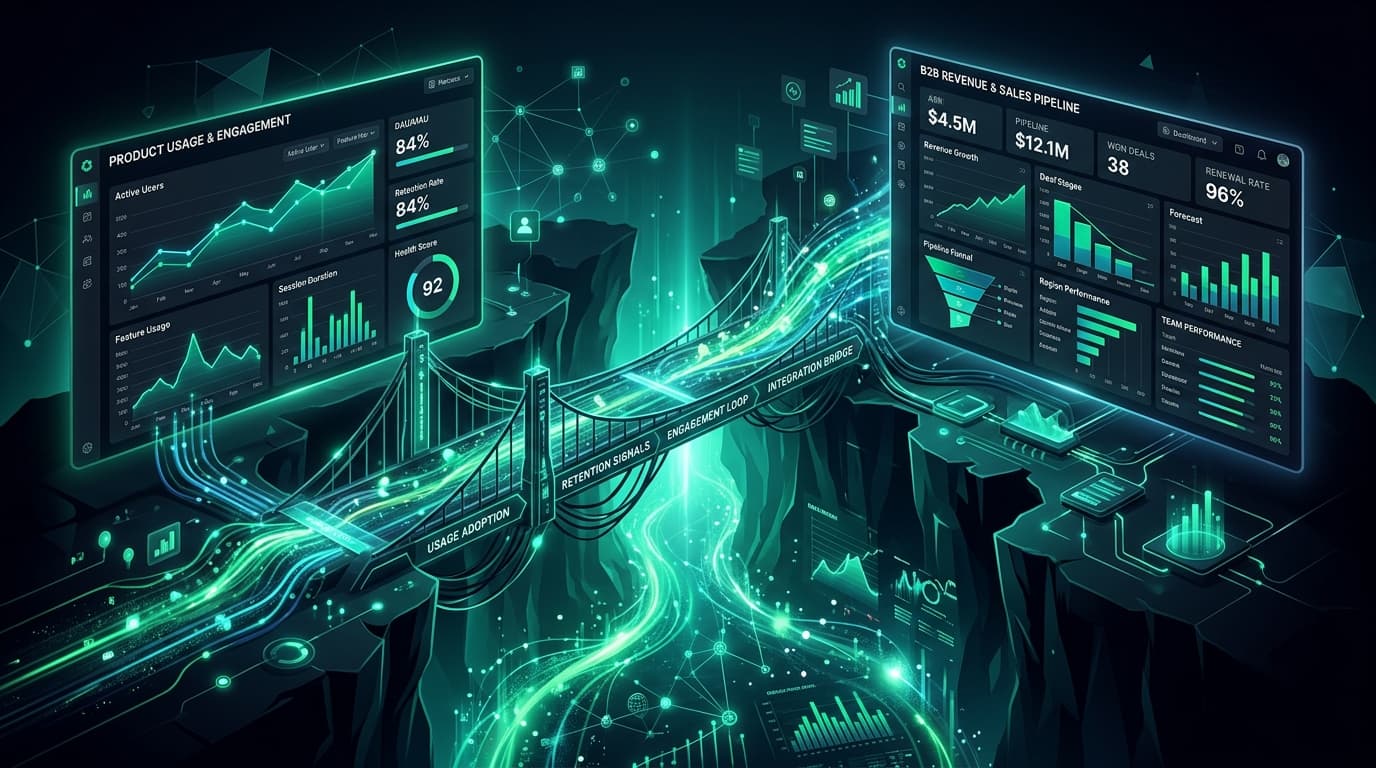
Bridging the AI Sales Intent Chasm in B2B SaaS
Bridge the gap between product usage signals and sales outreach by orchestrating AI-driven contextual handoffs that convert free trials to enterprise.